6 Sep 2026
Austria's Framework for Short-Term Gambling Installations: Compliance Standards, Essential Statistics, and Implementation Schedules
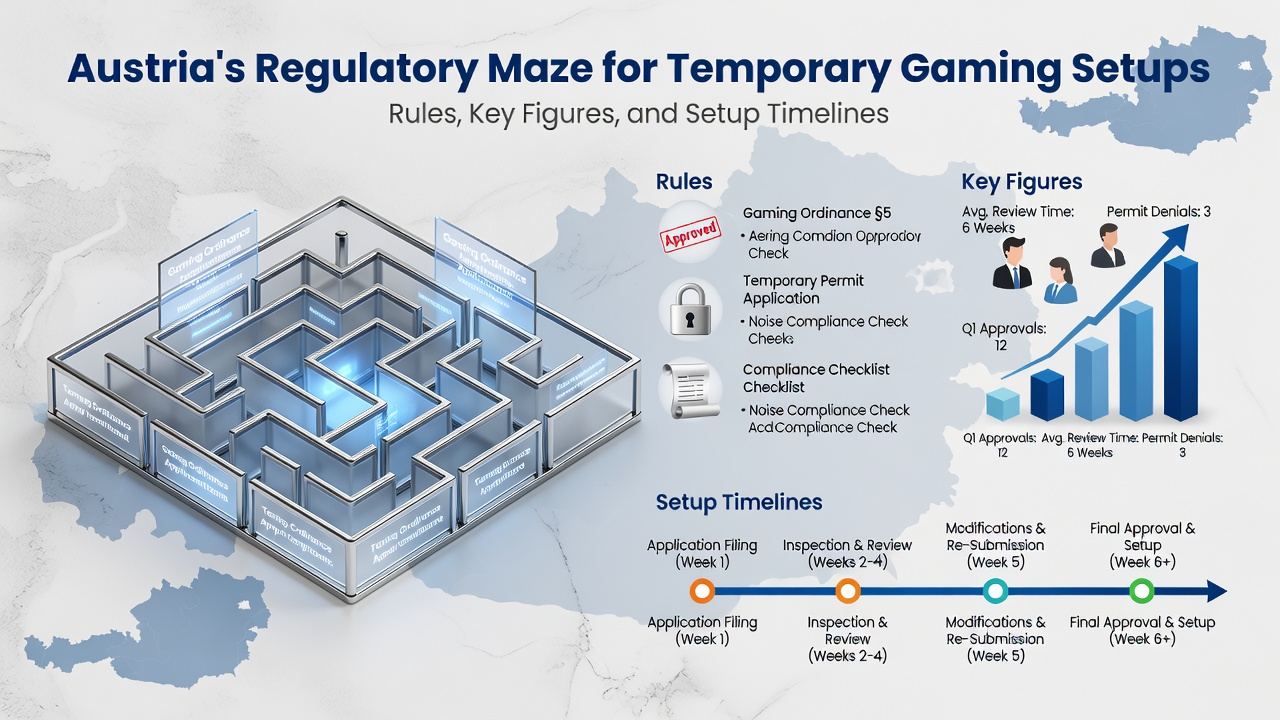
Austria maintains a structured approach to temporary gaming installations that requires operators to navigate multiple layers of federal and regional oversight before any equipment reaches an event site, and this system continues to evolve with updates scheduled through 2026.
Core Regulatory Requirements
Operators must secure permits from the Austrian Federal Ministry of Finance along with approvals from local authorities in each province where events occur, because temporary setups fall under the same licensing categories as permanent venues yet face shorter review cycles that still demand detailed safety and financial documentation. Data from the ministry shows that applications for events lasting under 30 days now average 45 days for initial processing, while those extending beyond that threshold often require additional municipal reviews that stretch timelines further. Observers note that compliance involves submitting floor plans, equipment certification records, and proof of responsible gaming measures, all of which must align with the Gaming Act amendments introduced in recent years.
Key Figures and Data Points
Statistics compiled by industry associations reveal that Austria hosted 127 temporary gaming events in 2024, generating combined revenues of approximately 18.4 million euros, while permit rejection rates stood at 12 percent primarily due to incomplete documentation on player age verification systems. Researchers tracking the sector report that average setup costs for compliant installations range from 25,000 to 85,000 euros depending on scale, and these figures include mandatory contributions to social responsibility funds that total 2.5 percent of projected event revenue. What's interesting is how provincial variations affect these numbers, with Vienna requiring extra environmental impact assessments that add roughly 15 percent to preparation expenses compared to regions like Tyrol.
Setup Timelines and Preparation Phases
Preparation for temporary gaming installations typically unfolds across four distinct phases that begin with pre-application consultations at least 90 days before the event date, and this early stage allows operators to identify potential conflicts with local zoning rules before formal submissions occur. The subsequent licensing phase consumes 30 to 60 days as authorities cross-check equipment against European safety standards, after which physical setup on site requires another 5 to 10 days for technical inspections and staff training sessions. Those who've coordinated multiple events often discover that September 2026 will introduce streamlined digital submission portals intended to shorten the licensing phase by up to 20 percent, according to ministry projections released earlier this year. But here's the thing: operators still must coordinate with police departments for security plans during the final 14 days, because crowd management protocols remain a separate approval track that runs parallel to gaming permits.
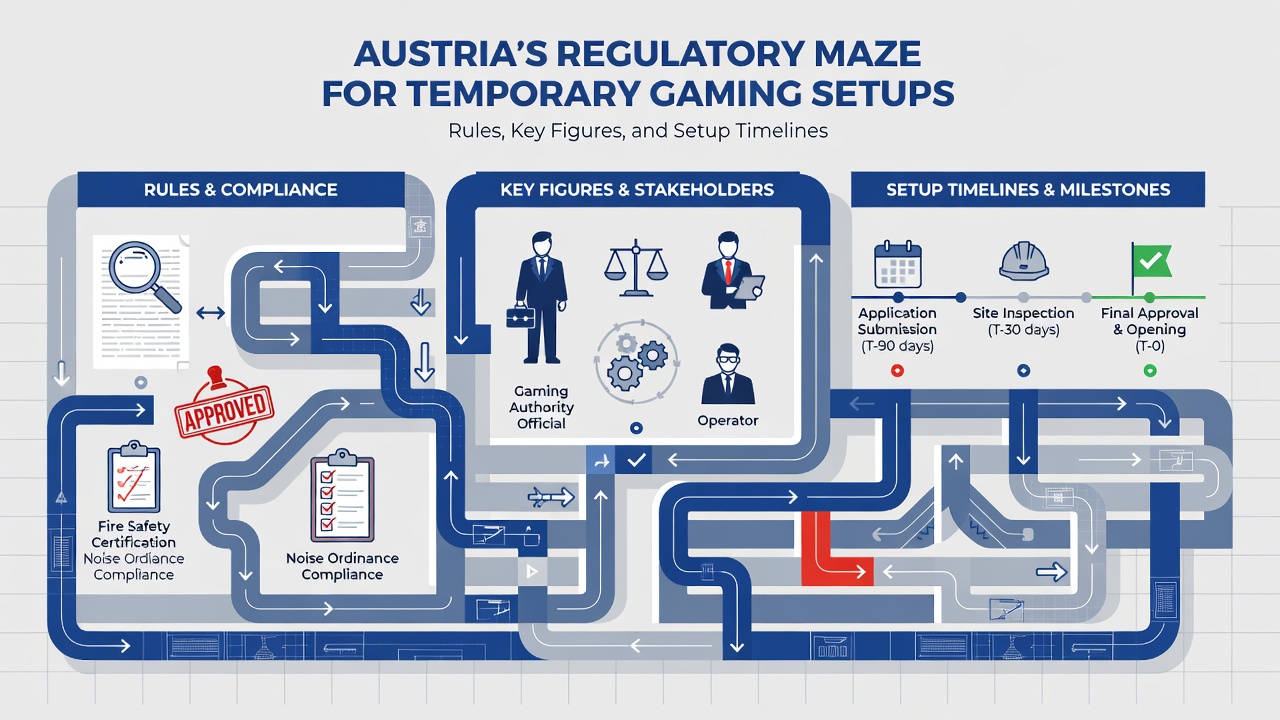
Case examples from past events illustrate how tight coordination prevents delays, such as one installation in Salzburg that completed all phases in 68 days by submitting parallel applications to both federal and municipal offices. Data indicates that events planned with buffer periods of at least three weeks between licensing completion and setup experience 30 percent fewer last-minute adjustments, whereas rushed timelines correlate with higher rates of equipment reconfiguration after initial inspections. External benchmarks from the Irish Gambling Regulatory Authority highlight similar phased approaches that Austria has adapted for its own multi-level system, while reports from the Western Australia Gaming and Wagering Commission provide comparative insights on digital permitting tools now under consideration for 2026 rollout.
Regional Variations Across Provinces
Each Austrian province applies additional layers to the national framework, and Lower Austria for instance mandates extra noise control evaluations for outdoor setups that can extend review periods by 10 to 14 days. Upper Austria focuses more on traffic management plans around event venues, requiring operators to submit detailed logistics documents that account for equipment transport routes and parking allocations. Those who've studied these differences know that Styria and Carinthia maintain faster turnaround times on average, often processing permits in under 40 days when applications include complete digital records from the outset. Evidence suggests these variations stem from local resource levels rather than differing policy priorities, yet they create predictable patterns that experienced coordinators use to sequence their submissions strategically.
Conclusion
Austria's regulatory structure for temporary gaming installations balances federal consistency with provincial flexibility, producing measurable outcomes in approval rates and event volumes that continue to guide future adjustments including the digital upgrades planned for September 2026. Operators who align their preparation schedules with documented timelines and regional specifics maintain higher success rates in securing necessary approvals without extended delays.